Electrobatt
International Conference on Electrochemistry of Batteries and Energy Storage Technologies





4-6 November, 2026 Rikli Balance Hotel, Bled, Slovenia
Invited Keynote Lectures
Electrochemistry of batteries and energy storage technologies 2026
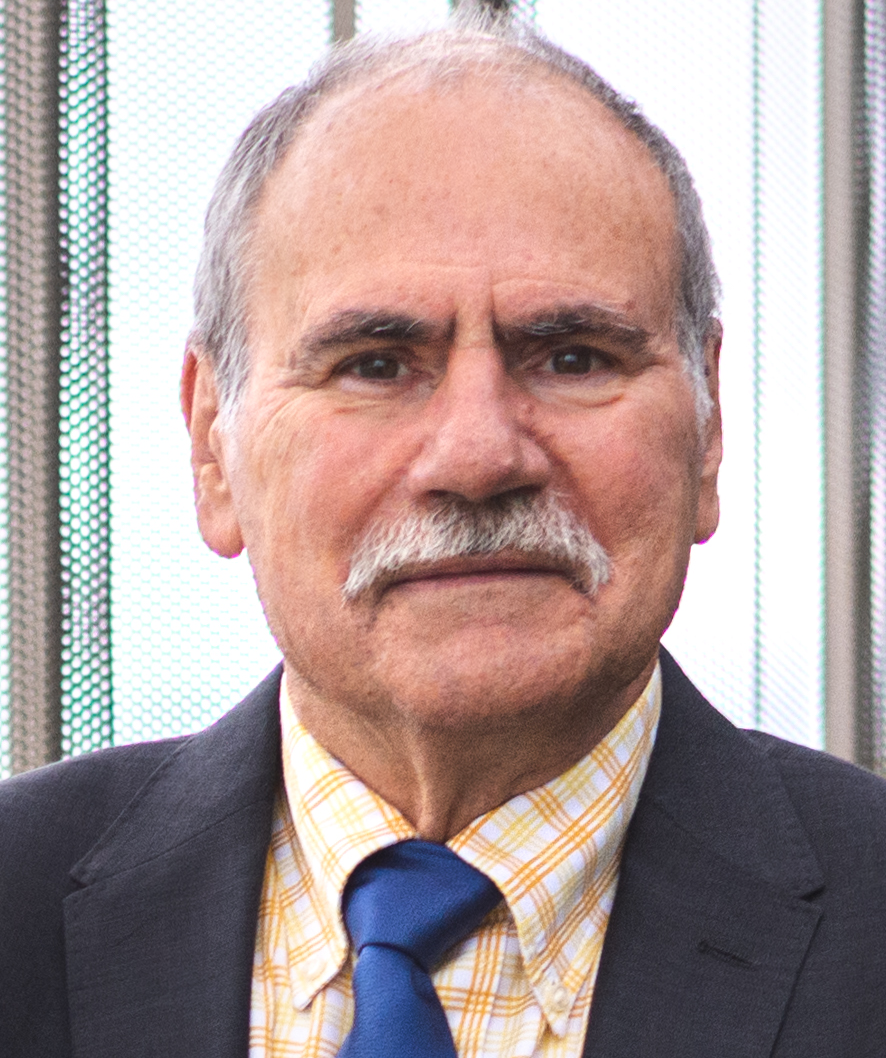
Prof. Michel Armand
CIC energiGUNE
New Solutes, PFAS-free, for Polymer Electrolytes
Prof. Dr. Michel Armand earned his Ph.D from Université Joseph Fourier in Grenoble in 1978. He was Director for Research at CNRS, France since 1989 and Professor at U. Montreal (1995−2004). He has pioneered the use of intercalation electrodes (1972), introduced polymer electrolytes (1978), new salts based on delocalized anions, FSI, TFSI, (1986), organic electrode materials (1996) and the carbon coating for LiFePO4 (1998). He joined CIC Energigune in 2013, and present activities include new solvating polymers for lithium and sodium, new salts and new organic and inorganic electrode materials; Michel Armand has > 520 publications, a H factor of 107; his work has been quoted > 95000 times.
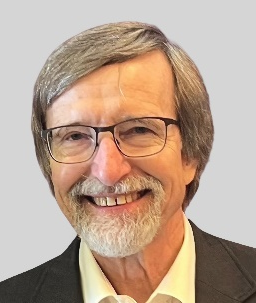
Prof. Petr Novák
Technical University of Braunschweig
The Price of Circularity: Can Battery Electrochemistry Survive Recycling?
Dr. Petr Novák is a Senior Fellow and Honorary Professor at the Technical University of Braunschweig and a Fellow of the International Society of Electrochemistry. He founded and led the Electrochemical Energy Storage Section at the Paul Scherrer Institute (PSI) in Switzerland—now the Laboratory for Battery Science—where he advanced research on lithium‑based and next‑generation battery systems. Earlier in his career, he held positions at the J. Heyrovský Institute in Prague and was a Humboldt Research Fellow at the University of Bonn. His recognition includes the ISE Tajima Prize, the Electrochemical Society’s Battery Division Technology Award, and the International Battery Association’s Yeager Award. Until his retirement, he was a Professor at ETH Zurich.
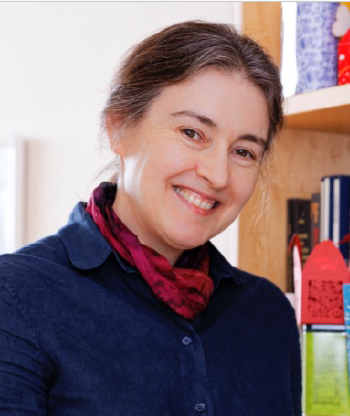
Prof. Dame Clare P. Grey
Cambridge University
New approaches for studying battery function and failure
Clare P. Grey, FRS, DBE is the Geoffrey Moorhouse-Gibson and Royal Society Professor of Chemistry at Cambridge University and a Fellow of Pembroke College Cambridge. She received a BA and D. Phil. (1991) in Chemistry from Oxford University. After post-doctoral fellowships in the Netherlands and at DuPont CR&D in Wilmington, DE, she joined the faculty at Stony Brook University (SBU) in 1994. She moved to Cambridge in 2009, maintaining an adjunct position at SBU. She was the founding director of the Northeastern Chemical Energy Storage Center, a Department of Energy, Energy Frontier Research Center, the director of the EPSRC Centre for Advanced Materials for Integrated Energy Systems (CAM-IES) and a founding member of the Faraday Institution. Recent honors/awards include the Société Chimique de France, French-British Prize (2017), the Solid State Ionics Galvani-Nernst-Wagner Mid-Career Award (2017), the Eastern Analytical Symposium Award for Outstanding Achievements in Magnetic Resonance (2018), the Italian Chemical Society Sacconi Medal (2018), the Charles Hatchett Award, IoM3 (2019), the RSC John Goodenough Award (2019), the Richard R. Ernst Prize in Magnetic Resonance (2020), the RS Hughes Award (2020), the Körber European Science Prize (2021), the ACS Central Science Disrupters Prize (2022) and the ISMAR Prize (2025). She is a Fellow of the Royal Society, the Electrochemical Society, and the International Society of Magnetic Resonance, and a Foreign member of the American Academy of Arts and Sciences, an International Member of the National Academy of Sciences (NAS), and received a DBE in 2022. Her current research interests include the use of solid-state NMR and diffraction-based methods to determine structure-function relationships in materials for energy storage (batteries and supercapacitors), and conversion (fuel cells). She is a cofounder of the company Nyobolt, which seeks to develop batteries for fast charge applications.
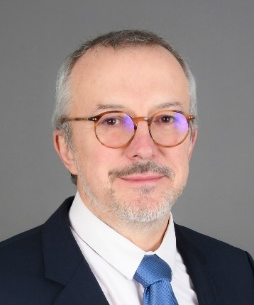
Prof. Patrice Simon
Université de Toulouse
Tracking Electron and Ion Fluxes in Energy Storage Electrodes: Advanced Electrochemical Characterization Approaches
Patrice Simon is Exceptional Class Professor of Material Science at the Université Toulouse III – Paul Sabatier and Fellow of the French Academy of Sciences, European Academy of Sciences and Academia Europaea. His research has fundamentally advanced the understanding of electrochemical processes occurring at electrode–electrolyte interfaces, with a particular emphasis on charge storage mechanisms in nanostructured materials (porous carbons, layered and 2D materials etc). He pioneered the demonstration that ion confinement in sub-nanometer pores significantly modifies ion solvation and governs capacitive energy storage behavior. He has bridged fundamental electrochemistry and practical device development, contributing to the design principles of next-generation high-power electrochemical capacitors and batteries
Prof. Michael Metzger
Dalhousie University
A Novel Multi-Channel Online Electrochemical Mass Spectrometer for Battery Gas Analysis Applied to Electrolyte Additive Screening
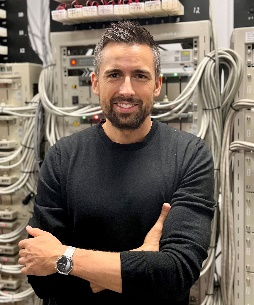
Michael Metzger is the Herzberg-Dahn Chair and Associate Professor of Physics at Dalhousie University. He is one of three principal investigators in the Tesla-Dalhousie research partnership. Metzger co-developed on-line electrochemical mass spectrometry, a gas analysis technique to diagnose battery cells, at TUM in collaboration with BASF and BMW (2013-2017). As a senior research engineer for Robert Bosch (2017-2020), he focused on solid-state batteries. Metzger is one of two co-leads for the Canadian Battery Innovation Center, a $20 million user facility at Dalhousie University for prototyping next-generation batteries. He has 12 patents and over 60 articles in peer-reviewed journals including Nature Materials. Metzger has been awarded the Herbert H. Uhlig Summer Fellowship for 2016 by the Electrochemical Society (ECS), 2016 Evonik Industries Research Prize, and the 2017 PwC “Strategy&” Presidential Award. Recently, he has also been awarded the 2025 ECS Battery Division Early Career Award and the 2025 President’s Research Excellence Award – Emerging Investigator at Dalhousie University. Metzger is also a technical advisor to the German startup, Litona, a spinoff from his lab.

Guinevere Giffin
Fraunhofer Institute for Silicate Research and Julius-Maximilians-University Würzburg
Guinevere Giffin is the Scientific Head of the Fraunhofer R&D Center Electromobility Bavaria at Fraunhofer ISC and is a Principal Investigator at the University of Würzburg. Since earning her PhD at the University of Oklahoma in 2009, Dr. Giffin has worked in the field of electrochemical energy conversion and storage at the University of Padova, MEET Battery Center at University of Münster and the Helmholtz Institute Ulm. Her research focuses on the elucidation of structure-property-process relationships of materials and components such as electrolytes for lithium-ion, sodium-ion and solid-state batteries, supercapacitors and during battery recycling.
Michal Bumbák
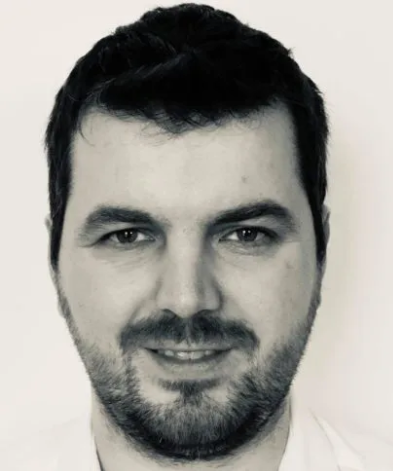
INO-HUB Energy
Michal Bumbák is Chief Technology Officer at INO-HUB Energy, where he leads research and development activities focused on vanadium redox flow battery. He holds an engineering degree in Mechanical Engineering from the Slovak University of Technology in Bratislava. Throughout his career, he has been involved in a range of complex engineering and innovation projects, including the development of Slovakia’s first R&D and manufacturing facility for lithium-ion cells, leading mechanical engineering teams in the design of automated production lines for the automotive sector, and contributing to the design of functional systems for a hybrid car-aircraft concept.
